Menu


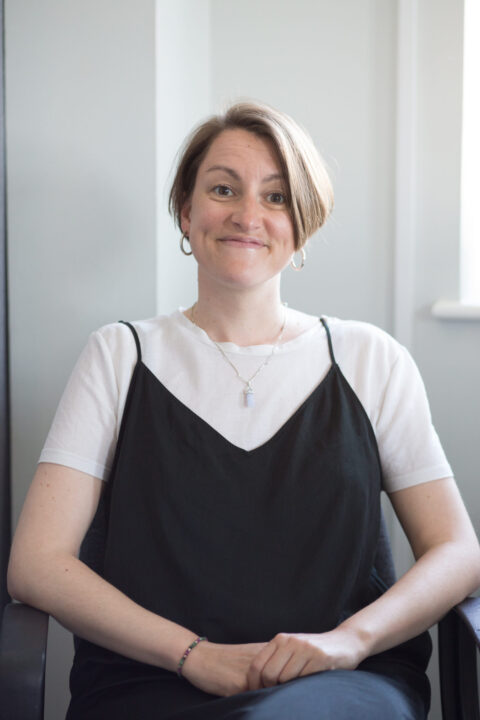
I have over a decade of experience working with children, young people and their families, with a particular interest in supporting those impacted by early life relational trauma. Initially in arts education and then as a dramatherapist, I have worked in a broad range of educational, clinical and outreach settings. In my therapy practice I integrate different experiential ways of working to help people heal their minds and bodies: these are informed by theory and research, and I incorporate this with my instinct, intuition and lived experience.
I am inspired to work alongside colleagues and fellow professionals practicing in this field, in education, clinical, social care and residential settings. I am passionate about helping those who help, by supporting to make sense of what might be going on for those they are working with, and what this stirs in them. I know firsthand how transformational it can be when things can be made sense of, particularly through a trauma and attachment framework, which means really considering what happened to make someone feel unsafe, and who was there to help make sense of it (or not).
I am interested in the impact of vicarious trauma and helping people to prevent or recover from burn out, and I aim to create a space where supervisees can bring their own responses to material, without judgement. I work relationally – which means emphasising the importance of relationship as a foundation for doing this work, reflectively – offering a space that makes room for curiosity and depth, and ethically – maintaining clear boundaries, working with respect and holding myself and others to account.
In all the stories that are shared with me from families and professionals, I hold in my mind and heart that there can be so much that gets in the way of people being able to live, work and parent in the ways that they would like. We are not all on an equal footing and taking into consideration the impact of culture, class, gender, gender roles, race, sexuality, financial security and visible and hidden disabilities, is an essential part of this job for me.
For those who want to, I can bring my skills as a dramatherapist to explore your supervisory queries experientially and creatively: this can be helpful to gain fresh perspective, a deeper understanding and to connect to your own resources and resilience. It is also a useful way to work with challenging and activating material, at a safe distance, which can help keep yourself and those you work with, as regulated as possible.
As well as working one to one, I am experienced in, and enjoy, facilitating groups for process and reflective practice – I believe it is through connection and community we stand the best chance of thriving.