If you have an accessibility need meaning that you need the information on this page in a different format, please contact us by telephone on 01444 413939, or ask someone that you trust to do this on your behalf. Thank you.

Here at Beacon House we have a diverse team of psychologists and psychotherapists who can work with a wide range of therapeutic needs in adults. We are enormously proud of the professional and personal skills and qualities that our therapists bring to the organisation. All of our therapists are registered with, and regulated by, the appropriate body for their core qualification; the Health and Care Professions Council, the United Kingdom Council for Psychotherapy, or the British Association for Counselling and Psychotherapy. You can find out more about our therapists here.

The adult team at Beacon House works seamlessly alongside the Children and Families team. Many of our therapists are skilled and experienced in working with both children and adults, which means that there is no need to change your therapist when you turn 18.

All adult services are overseen and led by Dr Laura France supported by our dedicated Adult Team Secretary, Jane Watson.

Inclusion

We are working hard to live out our value of ‘Everyone is Welcome’.

We invite you to let us know what you need to feel welcome at Beacon House. This might be, for example, letting us know how you would like us to address you, asking us to be mindful of specific cultural or faith-based considerations that are important to you, or perhaps a specific preference that you have for the personal characteristics of the therapist that you are matched with.

At the point of referral, we will ask you to share some important details about your identity, including your name and age, gender identity and preferred pronouns, and your ethnicity. We always need your name and age, but other than that, you can choose how much information to share.

We will also ask you if there are any characteristics that are especially important to you when we are matching you to a therapist. This might relate to:

  • the gender identity or sex of the therapist (e.g. I want to work with a male / female / non-binary therapist),
  • the sexual orientation of the therapist (e.g. I would like to work with someone from the LGBTQ+ community),
  • the ethnic background of the therapist (e.g. I would like to work with someone who has lived experience of my heritage)
  • and/or the therapeutic style of the therapist (e.g. I would like to work with someone who uses humour / someone who is creative / someone with a gentle tone of voice, etc).

We are committed to the goal of creating a team of therapists who are as diverse as the people that seek our help. If we can accommodate your preferences, we certainly will. This is an ongoing development for us, so we may not have a therapist in the team who is well-suited to your therapeutic needs and who matches your preferences. If we can’t, we will acknowledge this and you can expect your therapist to be open to a conversation with you, about how differences and similarities between you will be a part of your therapeutic relationship.

You may like to know that we have designated male, female and gender-inclusive bathrooms. The life-experiences that bring people to Beacon House are diverse and complicated, and we have taken care to provide spaces that meet the comfort needs of everyone using the building.

Accessibility

Accessing our communications

We take responsibility for our contribution to Climate Change seriously. One measure that we have taken, is to become ‘paperless’. This means that all of our communications are electronic, by email. At the point of referral, we will check whether written information in a standard format is accessible for you. We will also check that you have an electronic device with internet access. We are always happy to provide hard copies of documentation by post on request, so please do ask.

Accessing our building

At the point of referral, we will ask you if you have any accessibility needs for us to accommodate when you visit Beacon House. We have kerb-less entry at the front of the building, wide doorways, an elevator and an accessible bathroom. If you have restricted mobility and/or you use a wheelchair, please inform us and we will create an individual evacuation plan for you to be used in the event of a fire alarm.

We will also check that you have a device that you can use to access our electronic communications.

Assistance animals (the following section does not apply to Guide Dogs for the Blind or Hearing Dogs for the Deaf, who have a legally protected right of access to our building)

If you use an assistance animal to support you with your emotional, psychological or sensory needs, please advise us at the point of referral that you wish to be accompanied by your animal.

There is no legal definition of what constitutes an emotional / psychological / sensory assistance animal in the UK.

For the comfort and safety of everyone that uses our busy building, we ask for two pieces of documentation in relation to your assistance animal before they can access the building:

  1. Evidence that their pet insurance covers them as a ‘working animal’.
  2. Evidence that they have passed a public access assessment, consistent with the guidelines offered by best practice organisations such as Pets As Therapy and The Assistance Dog Assessment Association.

Our philosophy and values

Beacon House is a psychologically led organisation. Our approach to understanding your needs, and to supporting you to meet your therapy goals, is organised around ‘Psychological Formulation’.

A psychological formulation is a way to make sense of how and why a person has come to experience difficulty or distress, in the unique way that this shows itself for that person. You can see a formulation as a bit like a jigsaw puzzle; putting together the pieces of a person’s story in a way that allows us to see a complete picture. It also allows us to see where pieces are missing, and it tells us how best to help.

A psychological formulation is made up of the following puzzle pieces:

  • A person’s early years environment, early experiences of care, and developmental experiences.
  • The story of a person’s key transitional stages (e.g. childhood to adolescence, adolescence to adulthood).
  • Understanding any significant life events.
  • A detailed picture of how difficulty and distress impact upon daily life right now.
  • The factors that seem to make things more challenging, or stop them from getting better.
  • A person’s strengths, resources, skills and qualities.

All this information is then brought together, adding in some psychological theory and research evidence.

Our Adult Emotional and Psychological Health Service is not a diagnostic service (this is a little different for our Adult Specialist Trauma Service – please click here for further information) which means that your assessment here will not result in you being given a ‘label’ or diagnosed with a ‘disorder’.

This is because, in our view, a diagnostic label only does part of the job in describing the difficulty but doesn’t help so much in explaining or making sense of difficulties or guide us in how to help. As an organisation, we believe that people become distressed and experience emotional and psychological pain, because of having had to survive stress, adversity, trauma and/or challenging life events. If we can understand the ‘story’ of harms that have been experienced, then we can commence the journey of trying to heal the harms.

Having said that, we understand and respect that it is important for some people to have access to a diagnostic assessment, and to explore treatment with medication. We do not have Psychiatrists at Beacon House, and we do not prescribe medication. We have experience of some local, independent Psychiatry practices and we would be happy to give you details on request.
Needs that we can help with in the Adult Emotional and Psychological Health Service

If your need is not listed here, please go to Adult Specialist Trauma Service or have a look at our quick guide ‘Is Beacon House right for me?’

We can help with:

  • Anxiety and panic
  • Low self-esteem
  • Low mood or ups and downs in mood
  • Relationship difficulties
  • Phobias
  • Obsessions and compulsions
  • Stress
  • Attachment and relationship trauma
  • Single-incident Post-Traumatic Stress Disorder (PTSD)
  • Loss and bereavement
  • Self-injury and suicidal thoughts and urges
  • Recklessness, impulsivity and risky behaviours
  • Any of the difficulties above, in people who are neurodiverse

How do I refer myself?

To refer yourself, simply

Some people feel anxious, unsure or overwhelmed about contacting us directly. That is completely understandable – it’s a big step. We are happy for relatives or friends to make the initial contact with us but, if you are over 18, we will need to have some indication of your consent to the referral before we can progress it. This might involve you being present with your relative or friend when they contact us to give verbal agreement or sending an email to our Adult Service Secretary with your written agreement.

Our whole administrative team are warm, compassionate, experienced and sensitive. The information that they take from you over the telephone helps us to match you to the most appropriate therapist within the team.

What happens after I have referred myself?

All referrals are reviewed weekly on a Monday by Dr Laura France.

There are three possible outcomes:

  • Outcome 1: Standard Assessment
  • Outcome 2: Allocated to our Adult Specialist Trauma Service
  • Outcome 3: Recommended an alternative service

For more details about these outcomes please click here.

Matching you to a therapist

We take a lot of care to match you to the right therapist. Research has consistently shown, over many, many years, that the best predictor of a good outcome from therapy is the quality of the relationship that you and your therapist build with one another. When we are matching you to a therapist, we will be thinking about:

  • Who has the right therapy skills and experience to help with the difficulties that you have told us about?
  • Who meets your preferences for the type of person that you would like to work with?
  • Who offers a type of therapy that is likely to work well for you?
  • Who can offer both the assessment and the therapy, so that you don’t have to change therapists after assessment?
  • Who has an available space in their clinic, without too much of a wait?
  • Who can offer a day and time of the week that works well for you?

Usually, we are quite good at matching people to the right therapist for them. However, occasionally a client and/or therapist might feel that the match isn’t quite right, and this is not a problem. We can reallocate you to a different therapist in the team.

Sometimes clients decide that, having been for their assessment, that Beacon House as a whole isn’t quite right for them. Again, this is not a problem – you are under no obligation to commence therapy with us after your assessment, and if we can, we will signpost you to a different local service.

What happens at the assessment?

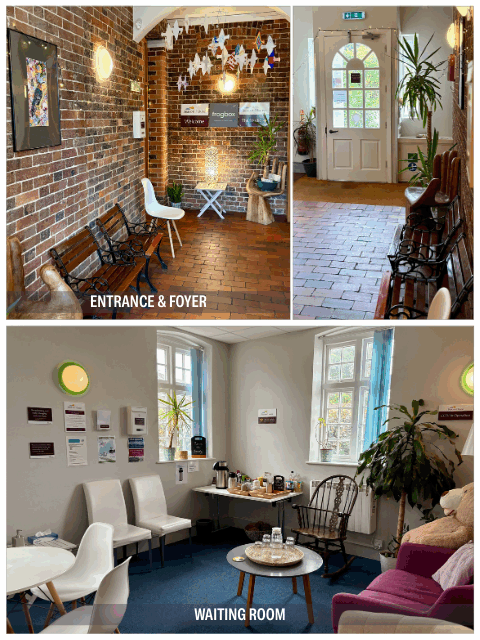
When you arrive at Beacon House, you will be welcomed by our receptionist and shown into our comfortable waiting room. You are welcome to make yourself a hot drink or help yourself to water. We have snacks available too. Your therapist will collect you from the waiting room at the time of your appointment.

The waiting room can get busy sometimes; if it feels a little too crowded for you, we have an airy foyer area where you can take a seat instead.

Our standard assessment is 50 minutes long. Many people are concerned that they are going to be asked to speak in detail about very difficult and distressing matters, having only just met their therapist. We acknowledge the courage that it takes for people to walk through our front door, and our priority is keeping you safe while you are here. Your initial assessment helps us to get an overview of what is troubling you, and it is not necessary for you to make yourself feel vulnerable by sharing more information than you feel ready to. Alternatively, you may have been needing to speak to someone for a long time, and you might want to tell your story in full at your first meeting with us. We will adapt to what you need.

Our standard assessment is most useful for people that already know that they would like to start therapy, and we see the assessment as the very first part of that. We focus on developing our first version of your personalised formulation so that we can make some clear therapy recommendations for you.

What happens after the assessment?

You will be provided with a written summary of your assessment, including a proposed therapy plan, within two weeks of your assessment appointment.

Some people decide on the day of their assessment that they would like to go ahead with therapy; if this is the case for you, you can usually start the following week. Some want to wait until they receive their written summary and have had a chance to read through the recommendations.

Importantly, there is no obligation to go ahead with therapy at Beacon House when you come for an assessment here.

Your recommendations will include one or more of the following therapeutic interventions:

How will my progress be reviewed?

Therapeutic progress is something which is continually reviewed throughout your therapy. During the assessment, your therapist will make a plan with you about how many sessions should take place before you pause and review how things are going.  Alongside this, we have three main ways that we keep an eye on your therapeutic progress:

  1. During your assessment, if it is appropriate, we will ask you to complete some questionnaires. We will repeat these questionnaires part way through therapy, and at the end of therapy.
  2. At your assessment, we will ask you what your therapeutic goals are, and how close you feel you are to meeting them. We will review your goals when we pause to review, and again at the end of therapy.
  3. At the end of therapy, you will be asked to tell us how satisfied you feel with your experience of coming to Beacon House.

Costs and funding

  • Clients accessing our Adult Emotional and Psychological Health Service usually fund their own assessment and therapy or use their Private Health Insurance.
  • We are a BUPA registered facility, meaning that all our therapists are available for BUPA clients. We also accept some AVIVA and WPA referrals. We are sorry – we do not work with AXA or Vitality.
  • If you are unable to fund yourself and you do not have Private Health Insurance, and you live in Sussex; you may be eligible to apply for a grant from the Shannon Moore Trauma Trust.
  • An assessment in the Adult Clinic costs £270; a 50-minute assessment appointment with your allocated therapist, and an equivalent 50-minute allowance for your therapist to complete your assessment letter. We will ask you to make payment in full to secure your appointment.
  • Therapy sessions are weekly and are charged at £135 per session. We ask you to make payment a minimum of 48 hours before each appointment.
  • Before proceeding with an assessment, you will be asked to read and sign our Agreement Form. All our Terms and Conditions are covered in detail in this document. If you have any questions, just ask.

Get in touch today to find out more.

All our adult services are delivered at our building in Cuckfield.

Please note: We are not able to accept any walk-ins. All meetings are by appointment only. Office hours are: Monday to Friday 9am to 5pm.